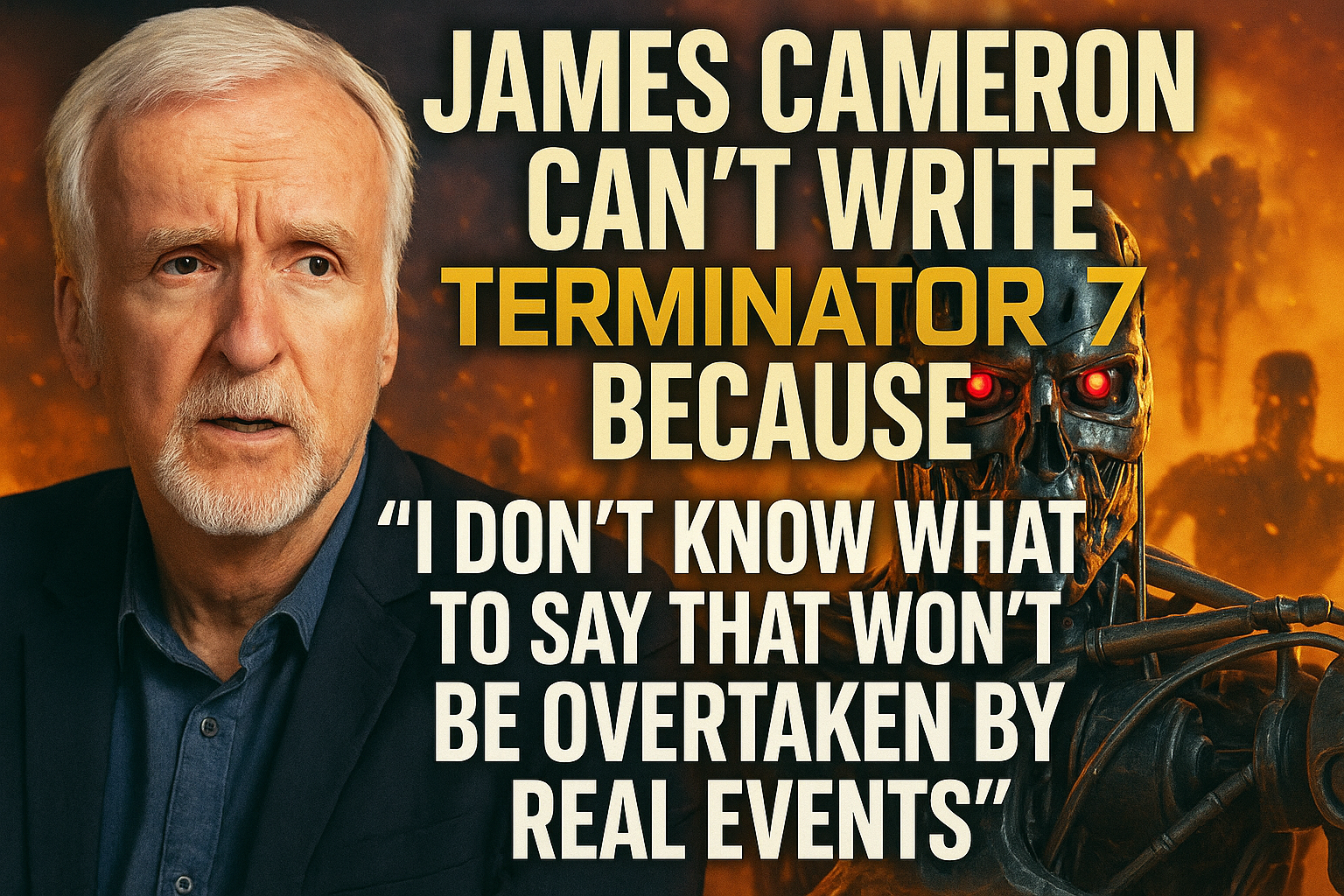
James Cameron can’t write Terminator 7 because “I don’t know what to say that won’t be overtaken by real events.”
Intro
“What No One Tells You About Cameron’s Struggle with Terminator 7”
Article
James Cameron’s reluctance to write “Terminator 7” stems from a profound realization: the narratives he once crafted have become eclipsed by the rapid evolution of real-world technology. In an era where artificial intelligence is no longer the stuff of science fiction, but a palpable reality, Cameron finds himself at a crossroads. “I don’t know what to say that won’t be overtaken by real events,” he candidly admits, highlighting a dilemma that resonates far beyond Hollywood.
The AI Landscape: A Moving Target
Cameron’s hesitance is rooted in the unpredictable nature of AI advancements. Just consider the past few years. In 2023, ChatGPT and similar models began transforming how we interact with technology, from customer service to creative writing. By 2025, AI had evolved to a point where it could generate not just text, but also music and visual art, challenging our very definitions of creativity and authorship.
This rapid progression creates a challenge for storytellers. How can a filmmaker depict a world dominated by AI when the real world is racing ahead, often in unexpected and unsettling ways? Cameron’s iconic “Terminator” series was built on a foundation of cautionary tales about technology gone awry. Yet, with the emergence of AI technologies that can mimic human behaviour and decision-making, the line between fiction and reality blurs.
Consider the case of autonomous drones used in warfare. The ethical implications of machines making life-and-death decisions resonate with themes in Cameron’s work. Yet, as these technologies develop, the narrative possibilities become more complex, pushing Cameron to wonder if his stories can keep pace. “The future is too scary,” he reflects, echoing a sentiment shared by many creators grappling with the implications of their art.
The Burden of Responsibility
Cameron’s dilemma also highlights a broader cultural concern: the responsibility of creators to address the ramifications of their narratives. The “Terminator” franchise has always served as a cautionary tale, warning against the potential perils of unchecked technological advancement. But as we witness AI’s integration into everyday life, the stakes are higher than ever.
In 2024, the rise of deepfake technology caused significant societal friction, leading to misinformation and distrust. This phenomenon underscores the urgent need for responsible storytelling. How can filmmakers like Cameron navigate these treacherous waters without inadvertently contributing to the very issues they seek to critique?
The challenge lies in crafting narratives that are both engaging and reflective of our current reality. Cameron’s acknowledgment of this burden is noteworthy. By stepping back from writing “Terminator 7,” he is not merely avoiding the challenge; he is recognizing the weight of his influence. He understands that the stories we tell can shape public perception, and with that power comes a profound responsibility.
The Search for New Horizons
So, where does this leave the “Terminator” franchise? Cameron’s admission opens the door to innovative storytelling approaches. Rather than relying on traditional narratives, creators could explore interactive formats, allowing audiences to engage with the story in real-time. Imagine a “Terminator” experience where viewers make choices that influence the outcome, reflecting the unpredictable nature of AI in our lives.
This shift could also pave the way for collaborative storytelling. By integrating perspectives from technologists, ethicists, and futurists, filmmakers can craft narratives that resonate more deeply with contemporary audiences. This approach not only enriches the storytelling process but also grounds it in a broader context, making it more relevant and impactful.
Moreover, Cameron’s pause could inspire a new wave of creators to tackle the complexities of AI and technology with fresh eyes. Instead of rehashing old tropes, the industry might pivot towards narratives that explore the human condition in an age of rapid technological change. This could lead to stories that are not only entertaining but also provoke critical thought about the future we are building.
Cameron’s struggle is emblematic of a larger existential question facing all creatives today: How do we tell stories that matter in an age where reality often outpaces fiction? The answer may lie in embracing uncertainty and inviting audiences to engage in the conversation.
In the end, James Cameron’s decision to step back from “Terminator 7” is not a retreat but a reflection of our times. It challenges us to rethink the role of storytelling in a world where the lines between reality and fiction are increasingly blurred. As we navigate this uncharted territory, the potential for innovative narratives is vast—if we dare to embrace it.
Our take
James Cameron’s hesitation to write “Terminator 7” reveals a profound truth about the storyteller’s role in an era where reality often eclipses fiction. This is not just a Hollywood dilemma; it resonates with anyone grappling with the rapid pace of change in their own lives, careers, or communities. As we witness AI redefine creativity and ethics, we must ask ourselves: how do we craft narratives that not only entertain but also provoke critical thought about the world we’re shaping?
Cameron’s pause might just be a catalyst for a new wave of storytelling—one that embraces interactivity and collaboration, inviting audiences to engage in the narrative process. The potential for innovative, relevant stories is vast, but it requires us to confront the uncomfortable truths of our technological reality.
As creators and consumers of culture, we must boldly step into this uncertainty, recognizing that our stories can shape perceptions and influence futures. Let’s challenge ourselves to ask: how can we transform our fears about technology into meaningful narratives that inspire change? In a world racing ahead, the most compelling stories may not just reflect our fears but illuminate the path forward.
Discover more from AI Facts
Subscribe to get the latest posts sent to your email.