‘What’s Going On Here’: X Users Ask If Trump’s Video After Charlie Kirk Shooting Is AI-Made
Intro
“Is Trump’s Post-Shooting Video AI? The Shocking Truth Revealed!”
Article
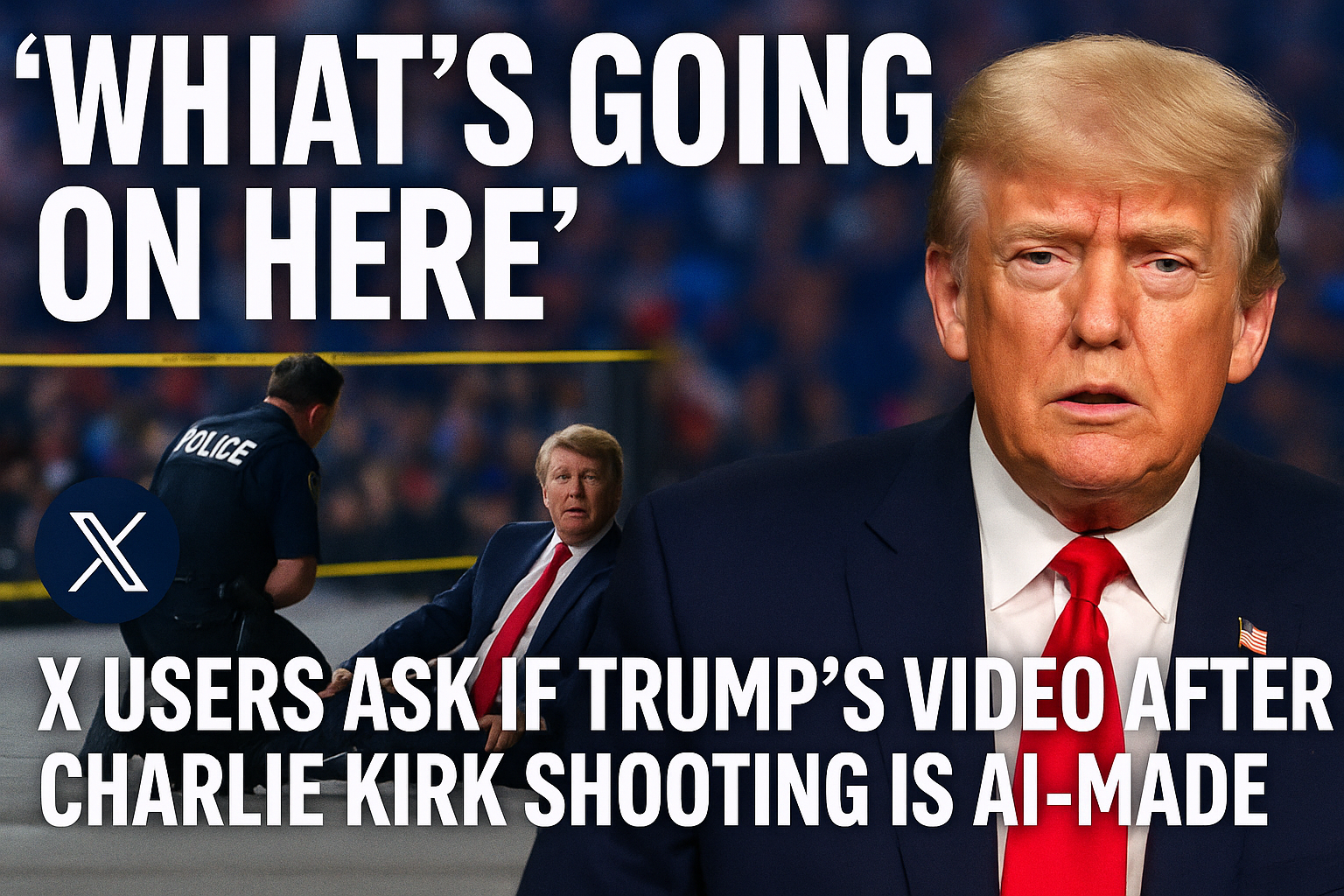
What’s Going On Here: X Users Ask If Trump’s Video After Charlie Kirk Shooting Is AI-Made
The digital landscape is shifting beneath our feet, and nowhere is this more evident than in the realm of political discourse. Recently, a video featuring Donald Trump addressing the aftermath of a shooting incident involving conservative activist Charlie Kirk sparked a heated debate on social media. Users on X (formerly Twitter) began questioning whether the video was generated by artificial intelligence, raising alarm bells about the authenticity of political messaging in an age dominated by deepfakes and AI manipulation.
AI’s Role in Misinformation
The concern over whether the Trump video was AI-generated taps into a larger fear: the erosion of trust in media. According to a 2022 Pew Research Centre study, 64% of Americans believe that fabricated news stories cause confusion about basic facts. The rise of AI tools capable of creating hyper-realistic videos amplifies this issue. With technology evolving rapidly, distinguishing between authentic and manipulated content is increasingly challenging.
In the case of the Trump video, users pointed to specific characteristics—unusual facial movements, unnatural speech patterns, and the overall tone of delivery—as indicators that it may not be genuine. This skepticism is not unfounded; deepfake technology has improved dramatically, making it easier for anyone with a computer to produce convincing fake content.
Consider the infamous deepfake video of former President Barack Obama, created by filmmaker Jordan Peele. It demonstrated how easily one can manipulate video to make it appear as if someone is saying things they never actually said. This incident served as a wake-up call, showcasing the potential for misinformation to spread like wildfire.
The Trump video, whether real or AI-generated, serves as a reminder of the precarious position we find ourselves in. As we consume content, we must sharpen our critical thinking skills and question the authenticity of what we see.
The Impact of Misinformation on Public Perception
Misinformation can have real-world consequences, shaping public perception and influencing political outcomes. A 2020 study published in the journal Science found that false news stories were 70% more likely to be retweeted than true stories. This phenomenon underscores the urgency of discerning fact from fiction, especially in a politically charged environment.
The Trump video’s potential for misinformation is particularly concerning given the context. Charlie Kirk is a polarizing figure, and any statement from Trump regarding him could sway public opinion significantly. If the video were AI-generated, it would not only mislead viewers but also manipulate the narrative surrounding Kirk, further entrenching divisions.
This situation illustrates the broader implications of AI in politics. As political campaigns increasingly leverage technology for messaging, the risk of misinformation looms large. Campaigns may find themselves grappling with the fallout of AI-generated content, whether it’s a deepfake or simply a poorly edited video.
The key takeaway here is that we must remain vigilant consumers of information. When encountering politically charged content, take a moment to verify its source and authenticity.
Navigating the Future of Political Discourse
As we navigate this new terrain, it’s essential to explore solutions for combating misinformation. Media literacy education is one avenue to equip individuals with the skills needed to critically assess the information they encounter. Schools and organizations can play a pivotal role in fostering a generation of informed citizens who can discern reality from fabrication.
Moreover, platforms like X have a responsibility to implement robust measures for identifying and flagging AI-generated content. Transparency in content creation can help users navigate the complexities of digital media.
For instance, consider the initiative taken by Facebook, which has implemented a system to label manipulated media. While not fool proof, it’s a step in the right direction. Increased transparency can help restore trust in the platforms we rely on for information.
As we look ahead, the intersection of technology and politics will only deepen. Embracing a culture of scepticism, combined with a commitment to media literacy, is essential for fostering a healthy democratic discourse.
In conclusion, whether the Trump video was AI-generated or not is less important than the conversation it ignites about trust, authenticity, and the future of political communication. As technology continues to evolve, so must our capacity for critical engagement with the information that shapes our world.
Our take
The debate over the authenticity of the Trump video underscores a startling reality: in an era where technology blurs the lines between truth and fabrication, our trust in information is perilously fragile. This matters deeply to each of us, as the narratives we consume shape our beliefs, decisions, and ultimately our society. As misinformation spreads like wildfire, we must cultivate a discerning eye, questioning the origins and motives behind the content we engage with.
What if the next viral video you see isn’t what it claims to be? This isn’t just a hypothetical; it’s a looming reality that demands our attention. As we move forward, let’s commit to fostering media literacy and demanding transparency from platforms that wield immense influence over public discourse.
In a world where every pixel can be manipulated, the call to action is clear: be vigilant, be sceptical, and never accept information at face value. After all, in the age of AI, the most powerful tool we possess may not be technology itself, but our ability to question it. “Trust is earned, not programmed.”
Discover more from AI Facts
Subscribe to get the latest posts sent to your email.