Climate: Should we start worrying
Intro
“Why You Should Start Worrying About the Future of Climate Now”
Article
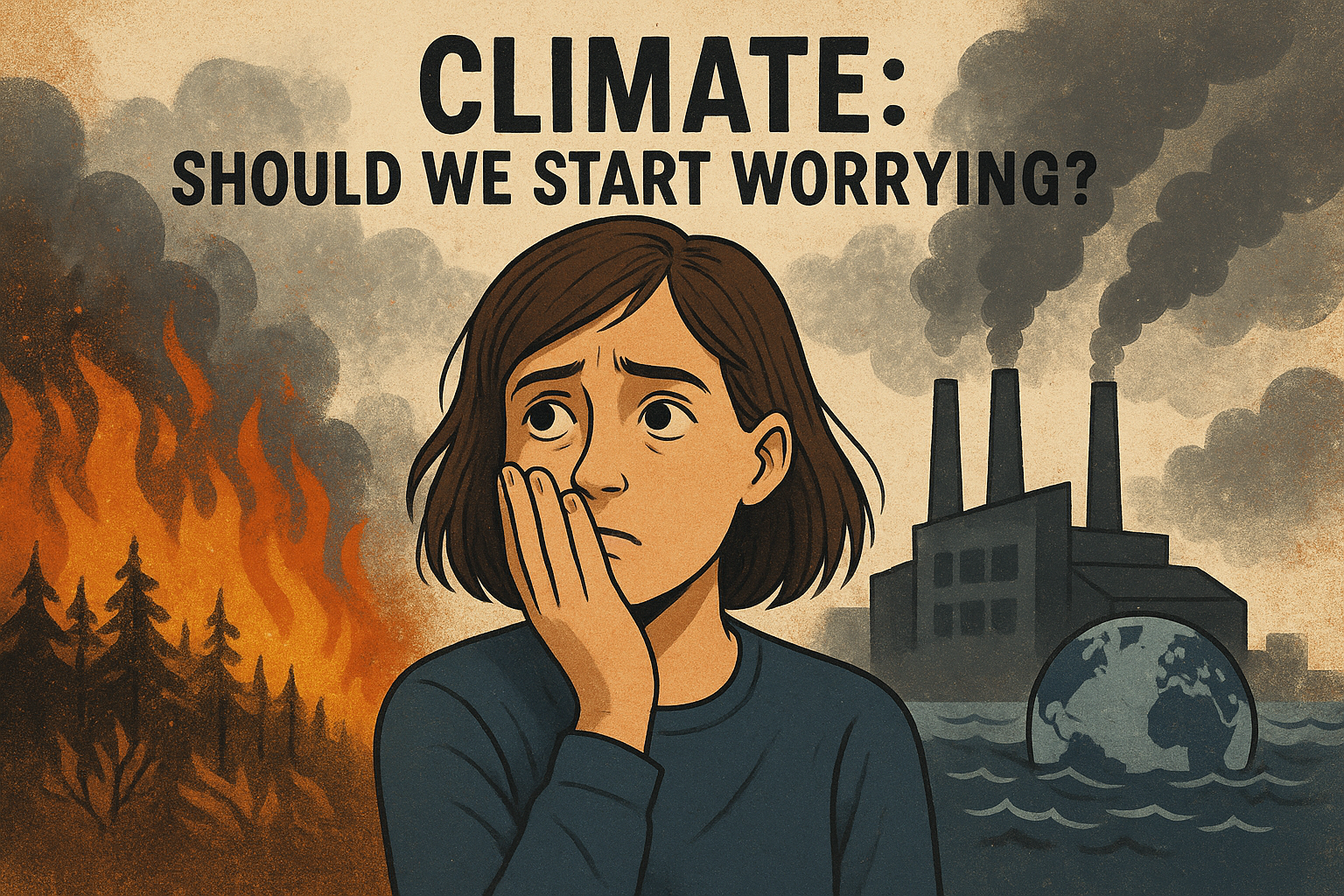
Should We Start Worrying?
The Surprising Truth About Climate Change
When we think of climate change, we often picture melting ice caps or rising sea levels. But here’s a startling fact: 2023 has seen the highest global temperatures on record. A report from the National Oceanic and Atmospheric Administration (NOAA) revealed that July 2023 was the hottest month ever recorded, with global average temperatures soaring 2.1 degrees Fahrenheit above pre-industrial levels. This isn’t just a statistic; it’s a wake-up call.
Most people assume that climate change is a distant threat. They think, “It won’t affect me for years.” But the reality is that extreme weather events are becoming more frequent and severe. In fact, the World Meteorological Organization (WMO) reported that the number of weather-related disasters has increased fivefold in the last 50 years. This is not just a future concern; it’s happening now.
Consider the recent wildfires in Canada, which burned over 10 million acres and released more carbon into the atmosphere than the entire country produces in a year. The smoke spread across North America, affecting air quality and public health as far away as New York City. This isn’t just an environmental issue; it’s a public health crisis.
The Economic Cost of Inaction
Many people believe that addressing climate change is an expensive endeavour, but the cost of inaction is staggering. According to a report from the National Academy of Sciences, failing to mitigate climate change could cost the U.S. economy up to $1 trillion annually by 2050. That’s not just a number; it translates to lost jobs, damaged infrastructure, and increased healthcare costs.
Take the case of Hurricane Harvey in 2017. The storm caused an estimated $125 billion in damages. Yet, experts warn that if we continue on our current path, future hurricanes could cause damages that are two to three times greater. Investing in climate resilience now could save us hundreds of billions down the line.
Moreover, the insurance industry is already feeling the pinch. In 2022, insurance companies paid out a record $132 billion in claims due to natural disasters. As claims rise, so do premiums, making it harder for individuals and businesses to afford coverage. This cycle of rising costs is unsustainable and should make us rethink our approach to climate action.
The Power of Individual Action
While it may seem that the problem is too big for any one person to tackle, individual actions can collectively make a significant impact. A study from the University of California found that if every American replaced just one light bulb with an energy-efficient LED, it would save enough energy to power 1.3 million homes for a year.
Moreover, lifestyle changes can have ripple effects. When consumers choose sustainable products, they send a clear message to companies about demand. Brands that prioritize sustainability are not only more appealing to consumers but are also seeing increased profitability. Unilever reported that its sustainable brands grew 69% faster than the rest of its portfolio in 2020.
This illustrates a powerful connection: our choices matter. Every time we buy, we vote for the kind of future we want.
Rethinking Our Future
It’s easy to fall into a sense of hopelessness when faced with the enormity of climate change. But here’s the silver lining: innovation is thriving. Renewable energy sources like solar and wind are becoming cheaper and more efficient. In fact, the International Energy Agency (IEA) predicts that by 2025, renewable energy could account for 90% of the global electricity demand growth.
Cities are also stepping up. From New York’s Green Roofs initiative to Amsterdam’s bike-friendly infrastructure, urban areas are reimagining how we live and work in a sustainable way. These changes not only help mitigate climate impacts but also enhance quality of life.
The unexpected connection here is that the solutions to our biggest challenges often lie within our grasp. By embracing innovation and making conscious choices, we can shape a better future.
The Time to Act is Now
The question isn’t whether we should worry; it’s how we respond to that worry. Climate change is not a distant threat; it’s an ongoing crisis that demands our immediate attention. While the challenges are daunting, the opportunities for innovation and improvement are even greater.
By understanding the stakes, recognizing the economic implications, and taking individual actions, we can drive meaningful change. The path forward may not be easy, but it is possible. And it begins with each of us choosing to care, act, and advocate for a sustainable future.
In the end, the most powerful tool we have is our collective will to change. Let’s harness that power and turn worry into action.
Conclusion
The truth is, climate change isn’t a distant spectre; it’s a reality that’s already reshaping our lives, economies, and environments. As we face record-breaking temperatures and increasingly severe weather events, the question isn’t merely whether we should worry—it’s how we will respond. Each of us holds a piece of the solution in our daily choices, from the light bulbs we buy to the companies we support. Imagine if every American chose to take just one small step towards sustainability; the cumulative effect could be staggering, saving enough energy to power millions of homes.
But let’s not stop there. With renewable energy on the brink of dominating global electricity growth, we stand at a pivotal moment in history. Will we seize this opportunity to innovate and adapt, or will we continue to let inaction cost us dearly? The time for complacency has passed; the urgency for action is now. As we navigate this crisis, remember: “The future isn’t something we enter; it’s something we create.” Let’s transform our worry into action and collectively shape a sustainable world for generations to come. Maybe AI has some answers.
Discover more from AI Facts
Subscribe to get the latest posts sent to your email.