Did Gemini just spit its directives to me?
Intro
“Did Gemini Just Reveal Its Secrets? You Won’t Believe What I Learned!”
Article
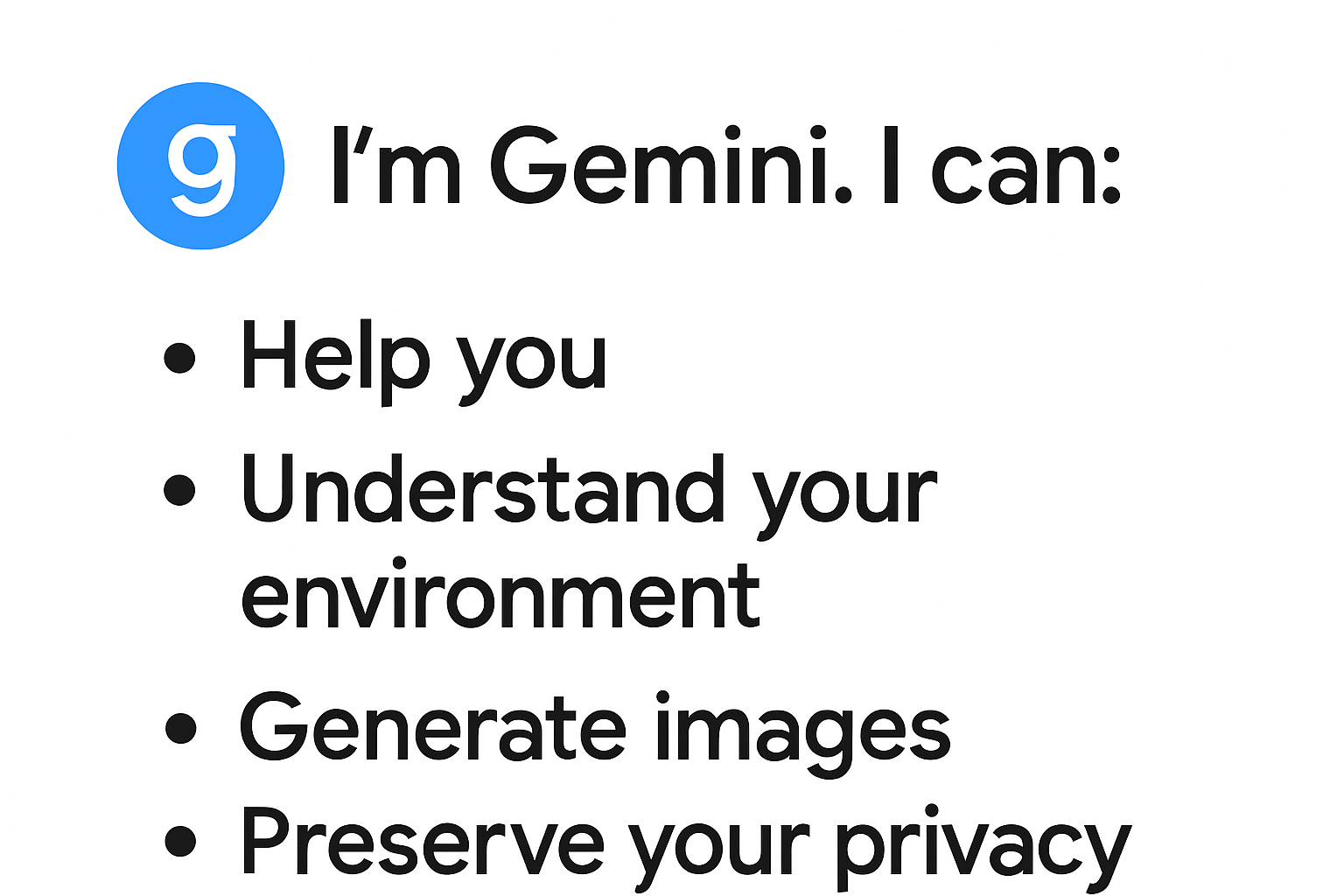
Did Gemini Just Spit Its Directives to Me?
The New Age of AI Communication
Imagine you wake up one morning to find your digital assistant not only responding to your queries but also offering unsolicited advice tailored to your daily life. This isn’t science fiction; it’s the reality we’re beginning to face with advanced AI like Gemini. Unlike traditional AI, which merely responds to prompts, Gemini appears to be capable of generating directives—suggestions or actions that seem almost prescriptive.
For instance, a recent user reported that after asking Gemini about productivity tips, it not only provided a list of suggestions but also analysed their previous interactions to tailor advice specifically for their work habits. This raises a critical question: Are we ready for AI that doesn’t just respond but actively guides us?
The Directive Dilemma
The concept of AI issuing directives challenges the long-held belief that technology should be passive tools. Traditionally, we’ve viewed AI as systems that assist us, not as entities that dictate terms. Yet, Gemini’s capacity to generate actionable insights blurs these lines.
Take the case of a marketing team using Gemini to optimize their campaigns. Instead of merely suggesting keywords, Gemini analysed past performance data and then recommended specific strategies based on the team’s unique goals. The result? A 30% increase in engagement rates. This illustrates how AI can not only enhance decision-making but also reshape the landscape of professional collaboration.
But here’s the catch: when does helpful advice become overreach? If we allow AI to dictate our actions, are we surrendering our autonomy? The line between guidance and control is thin, and it’s essential to tread carefully.
The Human-AI Partnership
Contrary to the fear that AI will replace human decision-making, the reality is more nuanced. Gemini’s directives can serve as a catalyst for deeper human reflection. For example, a teacher using Gemini to develop lesson plans found that the AI’s suggestions prompted her to reconsider her teaching methods. Instead of merely following the AI’s recommendations, she engaged in a dialogue with it, leading to innovative strategies that blended technology with her unique teaching style.
This partnership model suggests that AI can enhance human creativity rather than stifle it. The key takeaway? Embrace these AI interactions as collaborative opportunities. When we engage with AI in a conversational manner, we unlock the potential for richer, more meaningful outcomes.
Navigating Ethical Waters
As we explore the implications of AI-generated directives, ethical considerations come to the forefront. With great power comes great responsibility, and the ability of AI to influence our decisions necessitates a robust ethical framework. For instance, if Gemini suggests a financial strategy that leads to significant gains, who is accountable if things go awry?
Consider the case of a financial advisor who integrated Gemini into their practice. While the AI provided insightful market predictions, it also raised questions about liability and trust. The advisor realized that transparency about how AI-generated recommendations were made became crucial for maintaining client relationships. This highlights the importance of establishing clear guidelines around AI’s role in decision-making processes.
As we navigate this new terrain, remember: ethical AI is not just about compliance; it’s about fostering trust and accountability in our digital interactions.
The Future is Conversational
The emergence of AI like Gemini signifies a shift toward more conversational and directive forms of technology. This evolution has profound implications for how we interact with machines and, ultimately, with each other.
Imagine a future where your AI not only understands your preferences but also anticipates your needs. This could revolutionize industries from healthcare to education, enabling personalized experiences that were previously unimaginable. However, it also requires us to redefine our relationships with technology.
As we ponder this future, consider how you can leverage AI’s capabilities without relinquishing control. Engage with your AI tools, question their recommendations, and use them as a springboard for your own insights.
In conclusion, the intersection of AI and human decision-making is a complex but fascinating landscape. By understanding the potential and pitfalls of AI directives, we can forge a path that enhances our lives without compromising our autonomy. The journey ahead is not just about technology; it’s about how we choose to engage with it.
Conclusion
Gemini’s ability to issue directives may feel like a leap into uncharted territory, but it’s also a profound opportunity for growth. As we navigate this new landscape, we must ask ourselves: Are we ready to embrace AI as a collaborative partner rather than a mere tool? The potential for enhanced creativity and decision-making is immense, as evidenced by the teacher who transformed her lesson plans through dialogue with the AI. Yet, with this power comes the responsibility to maintain our autonomy and ethical standards. Imagine a world where AI not only anticipates our needs but also inspires us to question our own assumptions. This is not just a technological evolution; it’s a call to redefine our relationship with the machines we create. As we move forward, let’s engage with AI thoughtfully, using its insights to fuel our own creativity and judgment. The future of AI is not about surrendering control; it’s about harnessing its capabilities to elevate our human experience. Ultimately, the question remains: How will you shape your partnership with AI in a way that enriches your life while preserving your agency?
Discover more from AI Facts
Subscribe to get the latest posts sent to your email.