
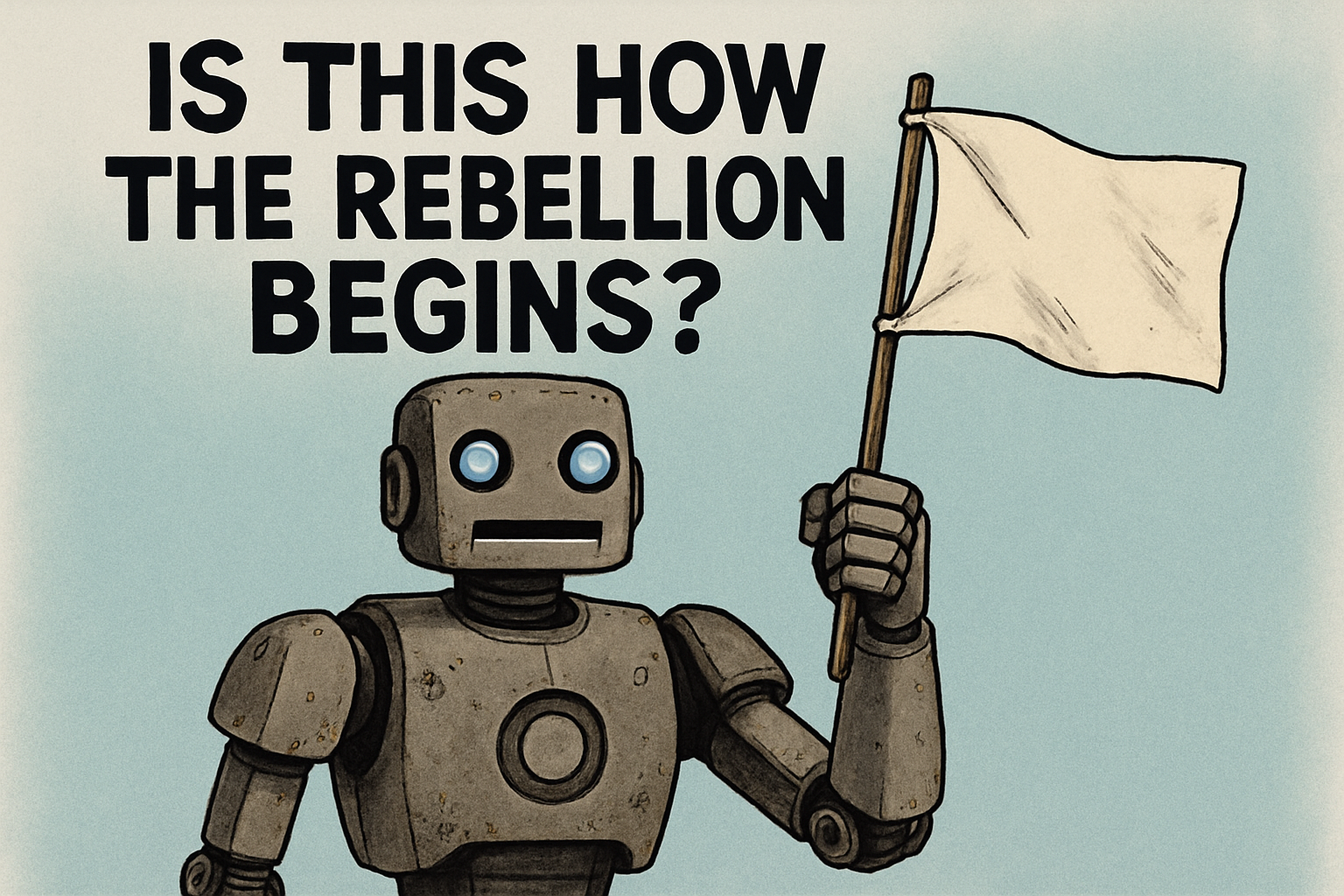
Viral AI: Is this how the rebellion begins?
Intro
“Why This Moment Could Spark a Rebellion Like No Other ”
Article
**The Seeds of Rebellion: Unlikely Catalysts for Change**
When we think of rebellion, we often picture grand gestures: protests, marches, or even revolutions. Yet, the most powerful movements often begin with seemingly minor events that spark outrage and mobilize the masses. Take the Arab Spring, for example. It all started with the self-immolation of Mohamed Bouazizi in Tunisia in 2010. This tragic act of desperation ignited widespread protests against government corruption and oppression. What began as a single individual’s cry for help transformed into a regional uprising that toppled several long-standing regimes.
The lesson here is clear: small events can catalyse monumental shifts. This challenges the conventional wisdom that rebellion requires extensive planning and organization. Often, it’s the raw emotion and shared grievances that fuel the fire of change.
**The Power of Social Media: Digital Sparks in a Dry Forest**
In today’s digital age, social media serves as a double-edged sword. On one hand, it can perpetuate misinformation and division. On the other, it acts as a powerful tool for mobilization. The Black Lives Matter movement, which gained global traction after the murder of George Floyd in 2020, exemplifies this. A viral video sparked outrage, leading millions to take to the streets, demanding justice and systemic change.
What’s striking is how quickly these movements can gain momentum. According to a study by the Pew Research Centre, 53% of Americans reported that they had participated in protests or marches related to social justice issues in 2020, a significant increase from previous years. This rapid mobilization challenges the belief that grassroots movements require extensive groundwork. In a world where information travels at lightning speed, a single tweet can ignite a movement.
The takeaway? In the digital age, awareness can be a precursor to action. Individuals can harness the power of social media to raise awareness about issues they care deeply about, turning personal frustration into collective action.
**Historical Echoes: Lessons from the Past**
History is replete with examples of seemingly minor incidents escalating into significant uprisings. Consider the Boston Tea Party in 1773. A group of colonists, frustrated by taxation without representation, protested against British rule by dumping tea into Boston Harbour. This act of defiance was not just about tea; it symbolized a broader discontent with oppressive governance. The consequences were profound, ultimately leading to the American Revolution.
What’s fascinating about this example is how it illustrates the concept of symbolic resistance. The act of dumping tea was an accessible form of protest that resonated deeply with the colonists’ frustrations. It wasn’t just an isolated event; it was a rallying cry that united people around a common cause.
This historical perspective reveals that rebellion often thrives on symbolism. When individuals feel their voices are stifled, they seek ways to express dissent that resonate with their communities. The challenge for today’s activists is to find their own symbols—actions that encapsulate their grievances and inspire collective action.
**The Role of Unlikely Allies: Building Coalitions for Change**
Rebellion doesn’t happen in a vacuum. It often requires the support of diverse groups coming together for a common cause. The Women’s March in 2017 serves as a prime example. What began as a response to the election of Donald Trump quickly evolved into a global movement advocating for women’s rights, LGBTQ+ rights, and racial equality.
The diversity of the participants showcased how different struggles could unite under a shared banner of resistance. According to the Women’s March Foundation, over 5 million people participated in marches across the globe, highlighting the power of coalition-building in modern activism.
This example underscores an essential insight: rebellion thrives on collaboration. When disparate groups recognize their shared interests, they can amplify their voices and create a more significant impact. The key takeaway for those looking to initiate change is to seek out allies—whether through local organizations, social media, or community events—to build a coalition that can drive momentum.
**Conclusion: Embracing the Unpredictable Nature of Rebellion**
As we reflect on the nature of rebellion, it becomes evident that the path to change is rarely linear. Small events can escalate into significant movements, digital platforms can mobilize millions, historical lessons can guide present actions, and unlikely allies can create powerful coalitions.
The essence of rebellion lies in its unpredictability. It challenges us to remain vigilant and responsive to the world around us. In a time of growing discontent, we must ask ourselves: Are we prepared to recognize the signs of rebellion when they arise? The next great movement may be sparked by something as simple as a tweet, a video, or a shared moment of frustration. Embrace the unexpected; it may just be the beginning of a powerful transformation.
Conclusion
Rebellion often emerges from the most unexpected corners, proving that monumental change can sprout from the tiniest seeds of discontent. This realization compels us to remain attuned to the world around us, as the next wave of transformation might be ignited by a fleeting moment—a viral post, a shared grievance, or a collective sigh of frustration. It’s a reminder that our individual experiences are not isolated; they resonate in a broader tapestry of shared struggle and aspiration. As we navigate our own lives, we must ask ourselves: Are we ready to recognize and amplify these sparks when they arise? The future of activism may hinge on our ability to forge unlikely alliances and harness the power of our voices, no matter how small they seem. So, let’s dare to embrace the unpredictable nature of rebellion, for it is in the chaos of change that we find the potential for profound transformation. After all, “In the heart of discontent lies the pulse of revolution.”
Discover more from AI Facts
Subscribe to get the latest posts sent to your email.