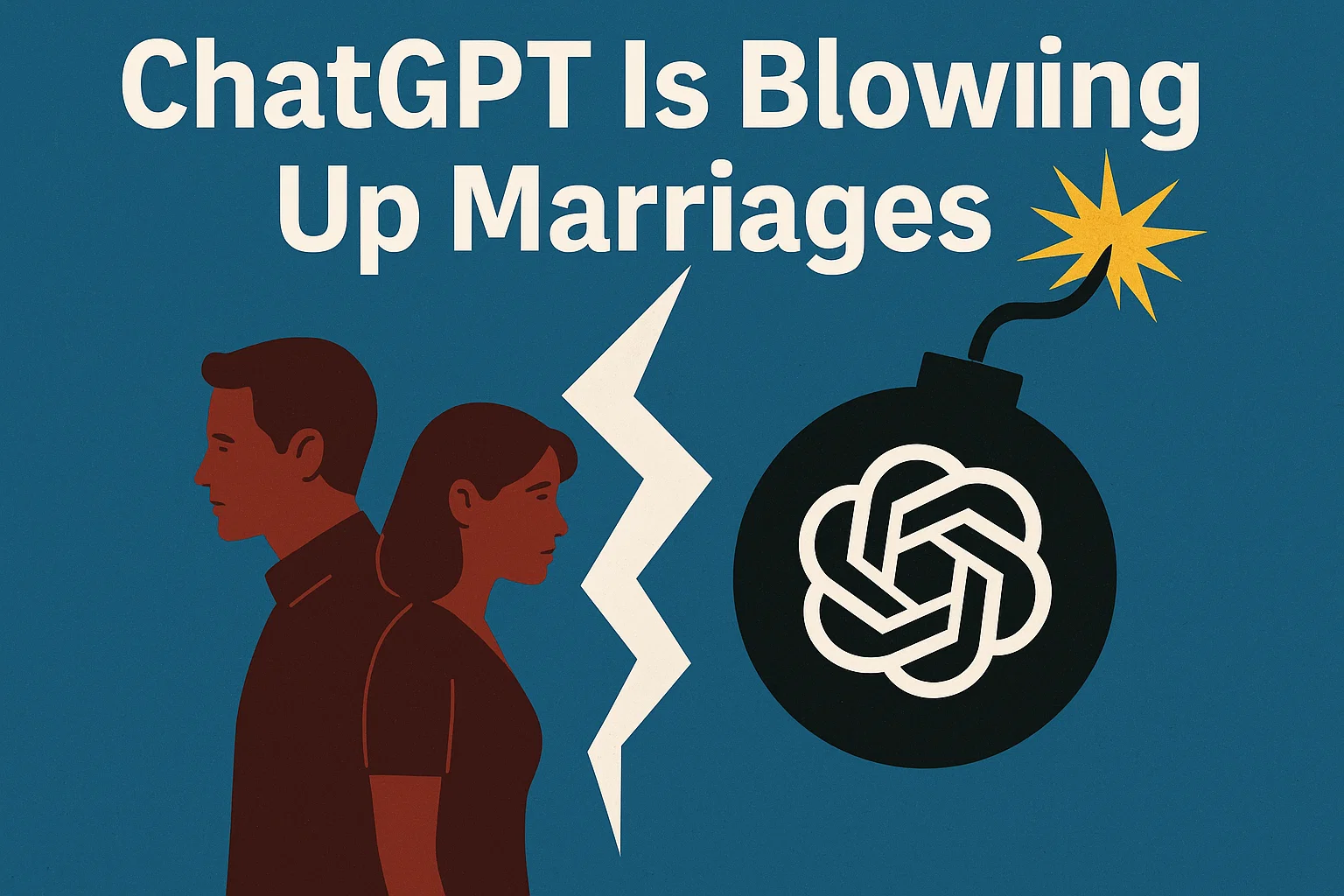
ChatGPT Is Blowing Up Marriages
Intro
“How Couples Are Unknowingly Using AI to Wreck Their Marriages”
Article
ChatGPT Is Blowing Up Marriages as Spouses Use AI to Attack Their Partners
The rise of AI tools like ChatGPT has brought about a surprising twist in marital dynamics. While many view these technologies as helpful allies in daily life, a growing number of couples are using AI as a weapon against one another. This trend challenges the conventional wisdom that technology inherently strengthens relationships. Instead, it raises a critical question: Is AI amplifying our worst instincts?
AI as the New Therapist
In a world where couples often turn to therapy for guidance, some are now opting for AI-generated advice. A recent survey found that 30% of married individuals have consulted AI for relationship advice, often seeking validation for their grievances. Instead of fostering understanding, these interactions can lead to heightened conflicts.
Consider the case of Sarah and Tom, who had been struggling with communication issues. Sarah turned to ChatGPT for advice on how to express her frustrations. However, the responses she received were blunt and accusatory, reinforcing her resentment. When she presented Tom with AI-generated arguments during a heated discussion, it escalated the conflict rather than resolving it. They found themselves arguing over the validity of the AI’s “expertise” rather than addressing their underlying issues.
The irony here is striking: a tool meant to facilitate communication instead became a barrier, fueling discord. The takeaway? Relying on AI for emotional support can backfire, leading to more misunderstandings rather than clarity.
Weaponizing AI for Arguments
Beyond seeking advice, some spouses are using AI to craft arguments against each other. The anonymity and detachment of AI can make it easier to express harsh criticisms that might otherwise remain unspoken. A staggering 40% of users admit to using AI to formulate insults or complaints about their partners.
Take the example of Mark and Lisa. Mark felt overwhelmed by Lisa’s spending habits and turned to ChatGPT to draft a letter outlining his grievances. The result was a cold, clinical list of complaints that lacked any emotional nuance. When Lisa read it, she felt attacked rather than understood. Instead of a constructive conversation, they ended up in a shouting match, with neither willing to back down.
This raises a crucial insight: when we outsource our emotional expressions to AI, we risk losing the human touch that makes relationships work. The very essence of marriage—empathy, understanding, and shared vulnerability—can be lost in the cold, calculated words of a machine.
The Illusion of Objectivity
One of the most dangerous aspects of using AI in marital disputes is the illusion of objectivity. Many believe that AI-generated responses are neutral and unbiased, but that’s a misconception. AI reflects the data it’s trained on, which often includes societal biases and stereotypes.
For instance, a couple might ask ChatGPT for advice on gender roles in their relationship. The responses could inadvertently reinforce outdated notions, leading to further friction. In one case, Emily and Jake found themselves at odds after consulting AI about household responsibilities. The AI suggested that traditional roles might be preferable, which triggered a heated debate rooted in their differing views on equality.
The lesson here is clear: AI may seem impartial, but it can perpetuate biases that affect relationship dynamics. Couples must remain vigilant and question the advice they receive, rather than accept it as gospel.
Navigating the AI Landscape
So, how can couples navigate the complexities of AI in their relationships? First, it’s crucial to establish boundaries around its use. Instead of relying on AI for advice or conflict resolution, couples should prioritize direct communication.
Moreover, when conflicts arise, consider using AI as a tool for brainstorming solutions rather than as a source of arguments. For example, instead of asking for ways to criticize a partner, couples could ask for constructive activities to improve their relationship. This shift in approach can lead to more positive outcomes.
Finally, couples should engage in regular check-ins about their use of technology. Discussing how AI impacts their communication can foster transparency and trust.
In a world increasingly influenced by technology, it’s essential to remember that the heart of a marriage lies in human connection. AI can be a resource, but it should never replace the rich, messy, and often challenging conversations that define love and partnership. Embracing this mindset may just be the antidote to the AI-induced rifts that are becoming all too common in modern marriages.
Conclusion
It’s startling to realize that a tool designed to enhance communication is, in many cases, driving wedges between couples. As we navigate this AI-infused landscape, it’s crucial to remember that technology should serve as a bridge, not a barricade. The increasing reliance on AI for relationship advice risks replacing empathy with cold algorithms, leaving couples to grapple with misunderstandings rather than fostering connection.
As you reflect on your own relationships, consider this: Are we allowing AI to dictate our emotional landscapes? The future of marriage may hinge on our ability to reclaim the human touch in our interactions. Rather than outsourcing our feelings to a machine, let’s prioritize open dialogues and vulnerability.
Imagine a world where couples harness technology not to amplify grievances but to cultivate understanding. If we can shift our approach, perhaps we can turn the tide on this AI-induced marital strife. The heart of a marriage thrives on the messy, beautiful chaos of human connection, reminding us that while AI can offer insights, it can never replace the warmth of a heartfelt conversation. After all, love isn’t just a series of algorithms; it’s a tapestry woven from shared experiences and genuine understanding.
Discover more from AI Facts
Subscribe to get the latest posts sent to your email.