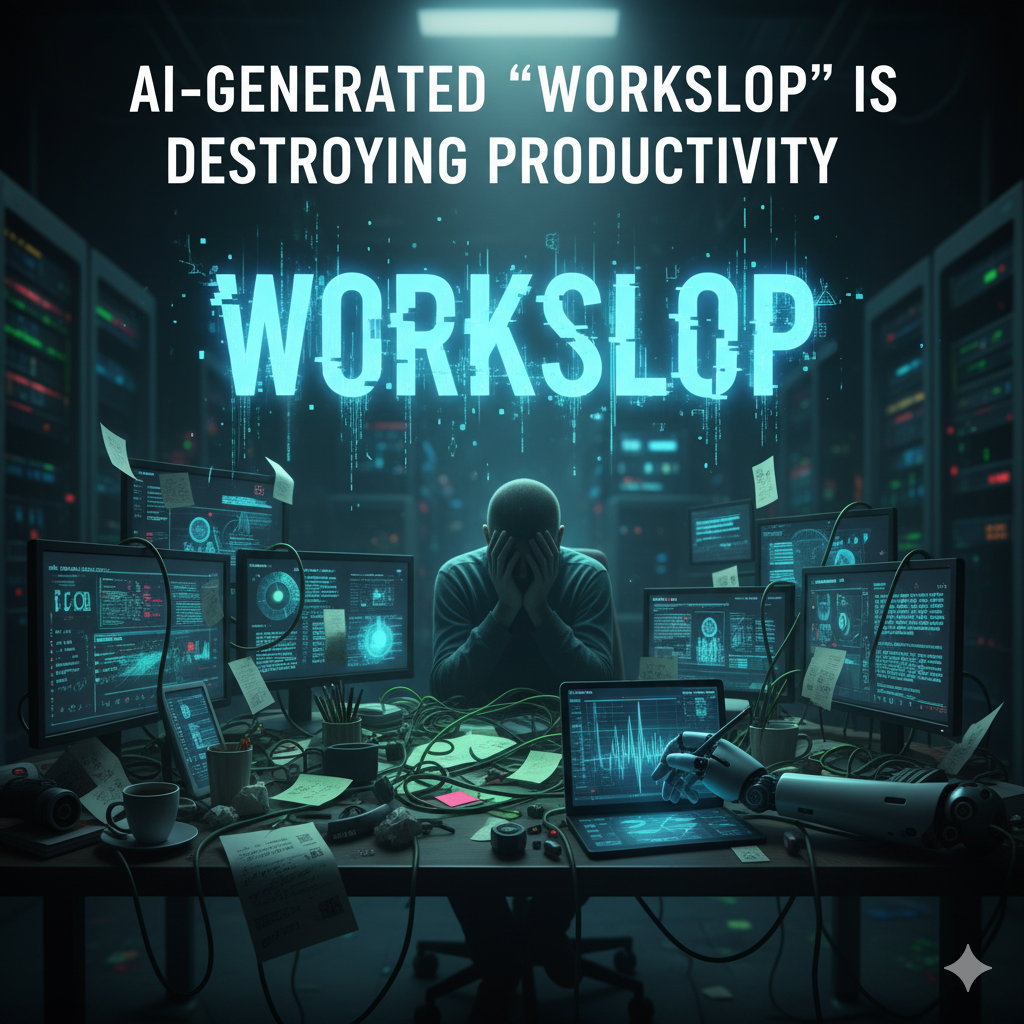
AI-Generated “Workslop” Is Destroying Productivity
Intro
“The Hidden Truth About AI-Generated ‘Workslop’ and Your Productivity”
Article
AI-generated content is often hailed as a revolutionary tool for enhancing productivity, yet many companies are finding that the reality is far less impressive. Instead of streamlining workflows and boosting efficiency, generative AI is producing what can only be described as “workslop”—content that looks polished on the surface but lacks depth and substance. This phenomenon is not just an annoyance; it’s a significant drain on productivity.
The Illusion of Efficiency
At first glance, AI-generated content seems like a dream come true. Employees can offload tedious tasks, freeing up time for more strategic work. However, this is where the illusion begins to unravel. A recent study by McKinsey found that while 70% of companies are investing in AI, only 8% report a significant return on investment. Why? Because the content produced often requires extensive revision and oversight, ultimately negating any time savings.
Take, for example, a marketing team at a mid-sized tech firm that decided to implement an AI tool for generating blog posts. Initially, they were thrilled with the quantity of content produced. However, as readers began to comment on the lack of insight and originality, the team found themselves spending more time editing and reworking AI-generated drafts than they would have spent creating original content from scratch. The result? A backlog of projects and frustrated team members.
The Cognitive Load Shift
One of the most insidious aspects of workslop is how it shifts cognitive labour. Instead of alleviating the burden on employees, AI tools often transfer that burden in a different form. Team members are left to sift through AI-generated content, identifying inaccuracies and filling in the gaps, which can lead to burnout and decreased morale.
Consider a customer service department that adopted an AI chatbot to handle inquiries. Initially, the chatbot seemed to reduce response times. However, as customers began to encounter issues that the AI couldn’t resolve, human agents found themselves inundated with complex cases that required nuanced understanding. The cognitive load didn’t disappear; it simply shifted to a different part of the team, leading to increased stress and lower overall productivity.
Quality Over Quantity
The allure of generative AI lies in its ability to produce vast amounts of content quickly. But this raises a critical question: Is more content better? The answer is a resounding no. Quality should always take precedence over quantity, especially in environments where trust and credibility are paramount.
A case in point is a financial services company that relied on AI to generate reports for its clients. While the reports were produced rapidly, they often contained outdated information or misinterpretations of data. Clients began to lose trust in the company’s ability to provide accurate insights, ultimately leading to a decline in business. The company learned the hard way that cutting corners with AI-generated workslop can have dire consequences.
The Human Touch
As companies navigate the complexities of AI integration, one thing is clear: the human element remains irreplaceable. While AI can assist with data processing and content generation, it lacks the contextual understanding and emotional intelligence that human workers bring to the table.
Organizations should focus on leveraging AI as a tool to augment human creativity rather than replace it. For instance, a design firm might use AI to generate initial concepts but require designers to refine and personalize those ideas. This approach not only enhances the quality of the output but also fosters a sense of ownership and engagement among team members.
The Road Ahead
To combat the rise of workslop, companies must rethink their approach to AI integration. Here are some actionable takeaways:
**Set Clear Goals**: Define what success looks like when using AI tools. Focus on quality metrics rather than sheer volume.
**Invest in Training**: Equip employees with the skills to effectively use AI tools, ensuring they can discern when to rely on AI and when to apply their expertise.
**Encourage Collaboration**: Foster a culture where human insight is valued alongside AI-generated content. Encourage teams to collaborate on refining AI outputs rather than merely accepting them.
**Monitor and Adjust**: Regularly assess the effectiveness of AI tools and be willing to pivot if they are not delivering the desired results.
In the end, the promise of generative AI is not in its ability to churn out endless streams of content but in its capacity to enhance human creativity and productivity. By avoiding the trap of workslop, organizations can truly harness the power of AI, driving both innovation and efficiency in the workplace.
Conclusion
The stark reality is that AI-generated content often masquerades as efficiency while shrouding the truth: it can sap productivity rather than enhance it. As professionals, we must confront the uncomfortable truth that more content isn’t synonymous with better outcomes. The cognitive load shifts, leaving employees to wrestle with a deluge of superficial workslop that demands their time and creativity. This isn’t just a business issue; it’s a personal one that affects our sense of accomplishment and fulfilment at work.
As we stand at the crossroads of technology and human ingenuity, let’s challenge the status quo: What if we prioritized quality over quantity, and embraced AI as a partner in creativity rather than a shortcut to mediocrity? The path forward lies in recognizing that the human touch is irreplaceable. We must cultivate environments where our insights and expertise shine alongside AI capabilities. If we harness this potential wisely, we can transform the narrative from one of frustration to innovation. After all, true productivity flourishes not in the shadows of workslop, but in the light of thoughtful collaboration. “In a world of AI, let’s not forget the power of the human spark.”
Discover more from AI Facts
Subscribe to get the latest posts sent to your email.