Microsoft CEO Concerned AI Will Destroy the Entire Company
Intro
“Is AI the Silent Killer of Microsoft? Here’s What You Need to Know”
Article
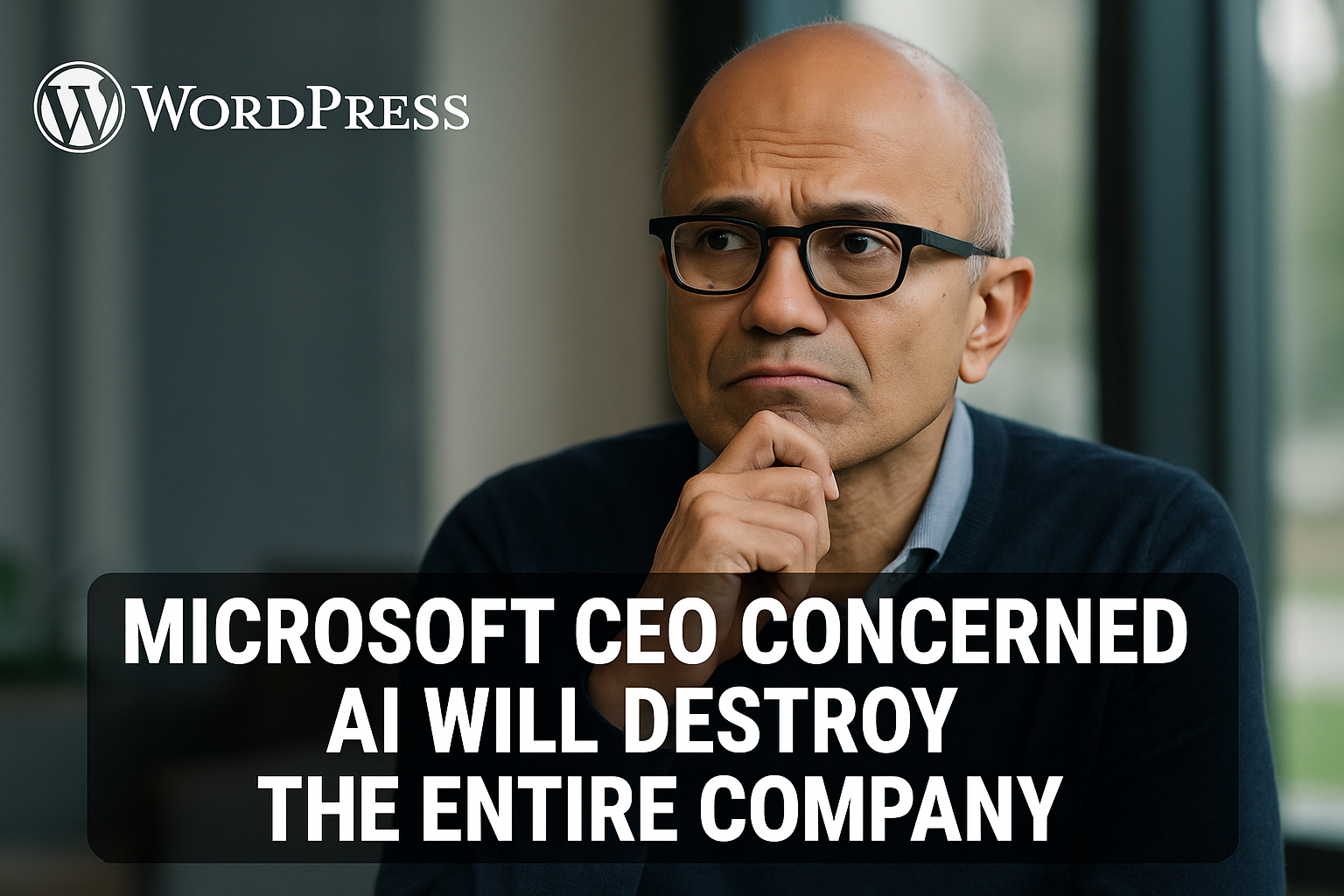
Microsoft CEO Satya Nadella recently expressed a sentiment that might surprise many: he’s genuinely concerned that artificial intelligence (AI) could lead to the downfall of Microsoft itself. This statement, while alarming, is not as far-fetched as it might seem. In an age where the rapid evolution of technology outpaces our understanding, the implications of AI are vast and unpredictable.
The Unpredictable Nature of AI
AI is not just a tool; it’s a transformative force that reshapes industries overnight. Nadella’s concern stems from the fact that we are only beginning to scratch the surface of AI’s capabilities. For instance, the rise of generative AI has already disrupted traditional content creation. Tools like OpenAI’s ChatGPT can produce human-like text, raising questions about the future of writing, journalism, and even coding.
Consider the case of Adobe, a company that has historically dominated the creative software market. With the introduction of AI-driven tools, such as those that automatically generate images or edit videos, Adobe faces a new reality. Their Creative Cloud suite, once unparalleled, now competes against AI tools that can deliver similar results with minimal human input. This rapid shift not only challenges existing business models but also forces companies to rethink their value propositions.
The fear that AI could undermine Microsoft’s core products—like Office and Azure—is not unfounded. If AI can perform tasks traditionally done by humans, what happens to the demand for Microsoft’s software? The answer isn’t as straightforward as it seems.
Rethinking Value in the Age of AI
Nadella’s insights compel us to reconsider what value means in a world increasingly dominated by AI. Traditional metrics of success—like market share and revenue—may no longer apply. Companies must redefine their purpose and how they deliver value to customers.
Take the automotive industry as an example. Tesla has not only sold cars but has also redefined the driving experience through its AI-driven technology. The company’s focus on software and data analytics has allowed it to create a product that evolves over time, rather than becoming obsolete. In contrast, traditional automakers that cling to outdated business models face significant risks.
For Microsoft, the challenge lies in leveraging AI to enhance its offerings rather than replace them. This requires a paradigm shift in how the company views its role in the market. Instead of seeing AI as a threat, embracing it as a partner could lead to innovative solutions that enhance user experience and drive growth.
The Ethical Dilemma
As AI continues to evolve, ethical concerns also come to the forefront. Issues surrounding data privacy, algorithmic bias, and job displacement are critical. Nadella’s apprehension reflects a broader concern within the tech industry: the potential for AI to exacerbate social inequalities.
For instance, facial recognition technology has faced significant backlash for its inaccuracies, particularly when it comes to identifying individuals from diverse backgrounds. Companies like IBM have pulled back from this space, acknowledging the ethical implications of deploying such technology without adequate safeguards. Microsoft must navigate this complex landscape carefully, ensuring that its AI initiatives prioritize ethical considerations.
This brings us to a crucial insight: the companies that prioritize ethical AI will likely emerge as leaders in the industry. By fostering transparency and accountability, Microsoft can build trust with consumers—a vital currency in the digital age.
Preparing for the Unknown
Nadella’s concerns about AI’s potential to disrupt Microsoft are a wake-up call for the entire tech sector. The unpredictable nature of AI means that companies must be agile, ready to adapt to unforeseen changes.
A prime example is the rapid evolution of remote work technology during the COVID-19 pandemic. Companies that were slow to adapt found themselves at a disadvantage, while those that embraced digital transformation thrived. Microsoft Teams became a staple for remote collaboration, but this success was built on a foundation of flexibility and responsiveness to changing needs.
The lesson here is clear: businesses must cultivate a culture of innovation and adaptability. This involves investing in research and development, fostering a diverse workforce, and being willing to pivot when necessary.
In conclusion, the concerns voiced by Nadella are not merely fears; they are calls to action. As AI continues to reshape the landscape, companies must be proactive rather than reactive. Embracing the unknown and preparing for potential disruptions will not only safeguard their future but could also lead to groundbreaking advancements that redefine industries. The question isn’t whether AI will change the world; it’s how companies will choose to navigate that change.
Conclusion
Satya Nadella’s candid acknowledgment of AI’s potential to jeopardize Microsoft is a striking reminder that even the giants of the tech world are vulnerable to the very innovations they champion. This isn’t just a corporate concern; it’s a personal one for every professional navigating a landscape where AI is redefining roles and responsibilities. As we witness industries transform at breakneck speed, the imperative is clear: adaptability and ethical foresight are no longer optional but essential for survival.
Imagine a future where the most successful companies don’t merely react to change but anticipate it, crafting solutions that enhance human creativity rather than replace it. The question we must grapple with is this: How will we, as individuals and organizations, harness AI’s capabilities while safeguarding our values?
In the coming years, those who prioritize ethical AI and cultivate a culture of innovation will not just survive—they will thrive. The time to embrace this challenge is now, for the next wave of industry leaders will be defined not by their technology alone, but by their ability to navigate the complexities of a rapidly evolving world. “The future belongs to those who prepare for it today.”
Discover more from AI Facts
Subscribe to get the latest posts sent to your email.