
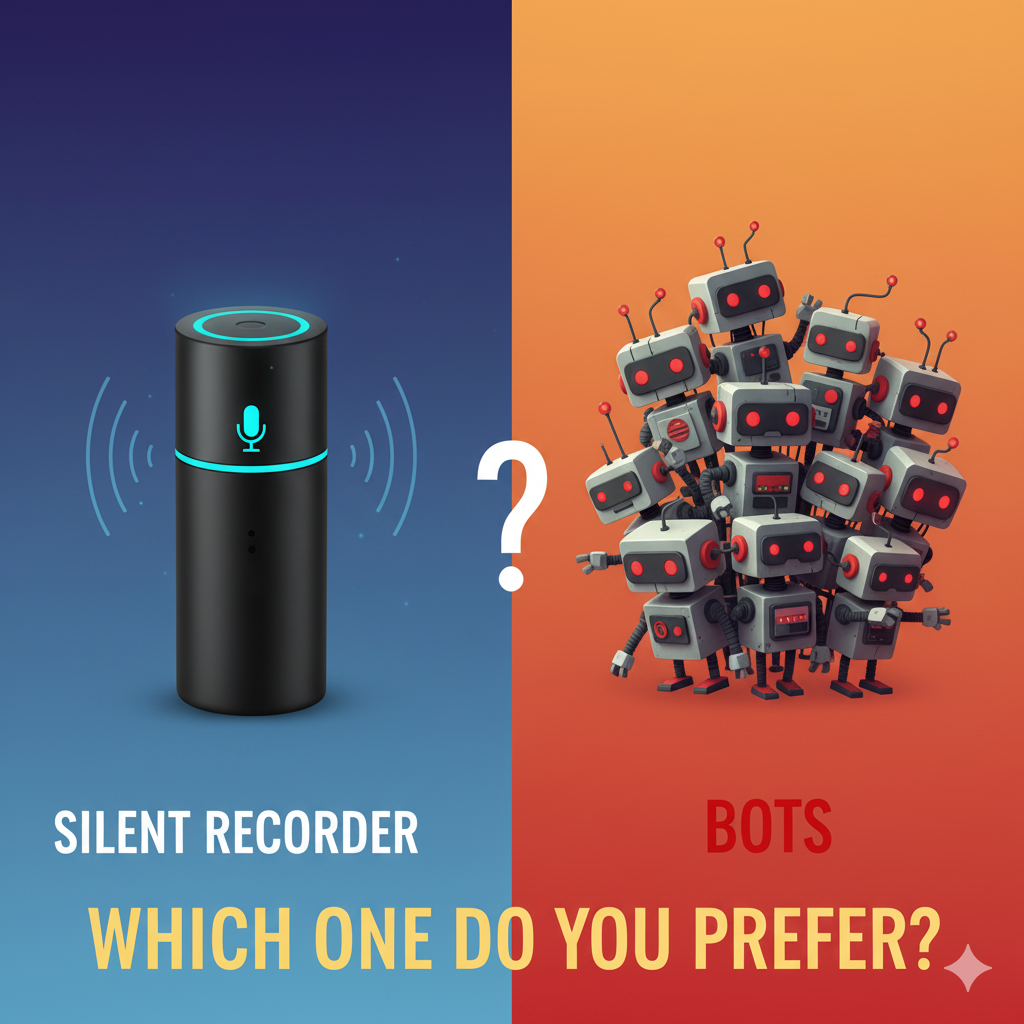
Silent recorder vs bots — which one do you prefer?
Intro
“Why Choosing Between Silent Recorders and Bots Will Blow Your Mind!”
Article
Silent Recorder vs Bots — Which One Do You Prefer?
The rise of AI note-taking tools has sparked a debate that many professionals are now grappling with: should we rely on bots that join our meetings, or opt for silent recorders that work discreetly in the background? Surprisingly, despite the increasing sophistication of AI, many still prefer the awkwardness of bots. But is this the best way forward?
The Bot Dilemma
Bots, like Otter.ai and Fireflies, have become the go-to for many organizations. They join meetings, listen in, and transcribe discussions in real-time. While they do the job, their presence often feels intrusive. The awkward pauses, the occasional misinterpretation of dialogue, and the inevitable “Can you hear me?” moments can disrupt the flow of conversation.
For instance, a recent study by the Journal of Business Communication found that 67% of participants felt less comfortable discussing sensitive topics when a bot was present. This suggests that while bots can capture information, they may inadvertently stifle open dialogue. The key takeaway? While bots are efficient, they can compromise the quality of interaction.
Silent Recorders: A New Paradigm
Enter silent recorders like Bluedot. These tools operate unobtrusively, capturing audio without interrupting the natural dynamics of a meeting. Imagine a scenario where a team brainstorms ideas for a new project. With a bot in the room, participants may hesitate to express their thoughts freely, worried about being misquoted or misunderstood. In contrast, a silent recorder allows for a more organic conversation, with the assurance that everything is documented accurately without the pressure of a digital observer.
Take the case of a tech startup that recently switched to a silent recorder. The team reported a 40% increase in creative contributions during brainstorming sessions. Participants felt liberated to share unconventional ideas without fear of judgment. This shift not only enhanced team morale but also led to innovative solutions that propelled the company forward. The lesson here is clear: sometimes, less is more.
Reliability and Trust
One of the criticisms of silent recorders is their perceived reliability. Can they truly capture every nuance of a conversation? While early models may have struggled, advancements in AI and audio processing have significantly improved their accuracy. Companies like Bluedot are investing in technology that enhances transcription quality and contextual understanding.
However, it’s essential to recognize that trust plays a crucial role in the adoption of these tools. A survey conducted by Tech Research Group found that 72% of professionals preferred silent recorders because they felt more in control over their data. They understood that the absence of a bot meant fewer distractions and greater confidence in the accuracy of the recording.
The Future Landscape
So, will silent recorders take over, or will bots remain the default? The answer likely lies in the context of use. For large-scale webinars or conferences, bots might still hold an advantage due to their ability to engage with participants and provide real-time feedback. However, in smaller, more intimate settings, silent recorders may emerge as the preferred choice.
Consider the evolving landscape of hybrid work environments. As remote collaboration becomes the norm, the need for tools that foster genuine connection is paramount. Silent recorders offer a solution that aligns with this need, providing a seamless way to capture discussions without the emotional baggage that bots can bring.
In conclusion, the choice between silent recorders and bots isn’t merely about functionality; it’s about how we value communication in our professional lives. As we navigate this evolving terrain, it’s essential to prioritize tools that enhance our interactions rather than hinder them. The future of note-taking may very well depend on our willingness to embrace change and rethink what effective communication looks like in the digital age.
Conclusion
Surprisingly, many professionals still lean towards the clunky presence of bots in meetings, despite their potential to disrupt the flow of conversation. This paradox reveals a deeper truth: our need for authentic communication often clashes with our reliance on technology. As we navigate our professional lives, the choice between silent recorders and bots becomes a reflection of how we value genuine interaction. In an era where remote collaboration is becoming the norm, we must ask ourselves: do we want our discussions to be dictated by the rigid presence of a bot, or do we crave the freedom that silent recorders provide?
The future is clear: as companies prioritize creativity and open dialogue, silent recorders will likely rise to prominence in intimate settings, allowing teams to innovate without the weight of digital scrutiny. Embracing these tools could be the key to unlocking a new era of collaboration. As we rethink our approach to communication, let’s remember that the best conversations happen when we feel safe to share our thoughts. After all, in the world of business, less can truly be more—especially when it comes to fostering connection.
Discover more from AI Facts
Subscribe to get the latest posts sent to your email.