Why Salesforce’s AI Revolution Is Outpacing Customer Adoption
Intro
“Why Salesforce’s AI Revolution Is Outpacing Customer Adoption”
Article
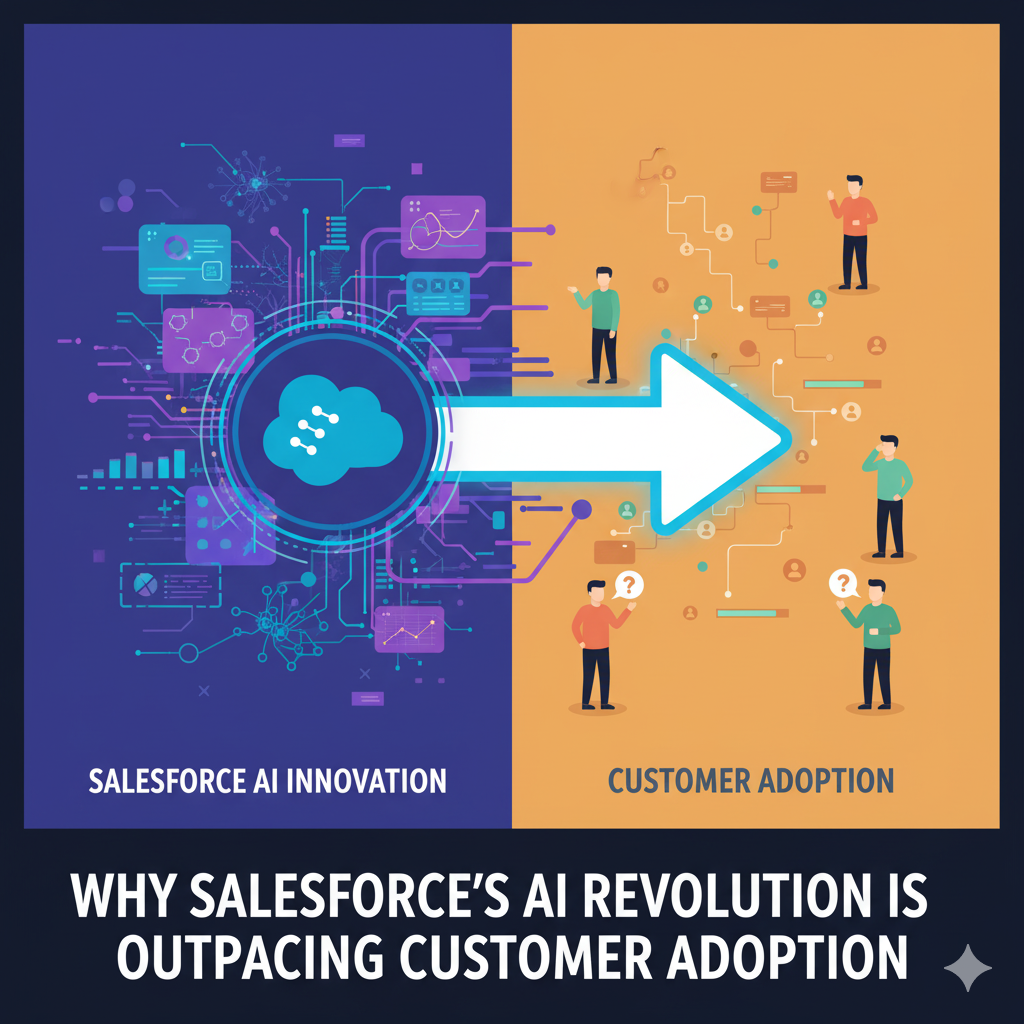
Marc Benioff, the visionary CEO of Salesforce, recently made headlines by asserting that AI innovation is “far exceeding” customer adoption. This statement flies in the face of conventional wisdom, which often assumes that technological advancements are quickly embraced by businesses. However, the reality is more nuanced. While AI capabilities are advancing at breakneck speed, many organisations struggle to integrate these innovations into their existing frameworks.
Take, for instance, the integration of AI-driven chatbots in customer service. Companies like Starbucks have successfully implemented AI to enhance customer interactions, using chatbots to take orders and provide personalised recommendations. Yet, many smaller businesses remain hesitant, fearing the complexity of implementation or potential disruptions to their customer experience. This disparity highlights a crucial point: just because technology is available doesn’t mean it’s being effectively utilised.
The challenge lies not in the technology itself but in the readiness of organisations to adapt. A Salesforce survey revealed that 75% of companies recognise the transformative potential of AI, yet only 27% have fully integrated AI solutions into their operations. This gap indicates a significant lag in adoption, and it raises questions about how businesses can bridge this divide.
Understanding the Adoption Gap
Why is there such a stark difference between innovation and adoption? One reason is the overwhelming pace of change. With new AI tools emerging almost daily, businesses can feel paralysed by choice. This is especially true for organisations lacking a clear strategy for digital transformation. Without a roadmap, the fear of making the wrong decision can lead to inaction.
Consider the case of a mid-sized retail company that recently attempted to implement an AI-driven inventory management system. Despite the potential for improved efficiency, the team was bogged down by uncertainty. They spent months evaluating options, ultimately leading to missed opportunities during peak sales periods. The irony? Their competitors who had embraced AI early on gained a significant market advantage.
This scenario underscores a critical insight: businesses must prioritise not just the adoption of AI but also the development of a culture that embraces change. Companies that foster an environment of experimentation and learning are more likely to succeed in integrating new technologies.
The Role of Education and Training
Another factor contributing to the adoption gap is the skills shortage in the workforce. As AI technologies evolve, so too must the skill sets of employees. A report from McKinsey found that up to 375 million workers may need to switch occupational categories by 2030 due to automation and AI advancements. This statistic is staggering and highlights the urgency for organisations to invest in education and training.
For example, IBM has launched initiatives to up-skill its workforce in AI and data analytics. By providing employees with the necessary training, the company not only enhances its internal capabilities but also builds a more agile workforce ready to tackle future challenges. Organisations that follow suit will find themselves better positioned to adopt AI innovations as they arise.
Moreover, education isn’t limited to employees alone. Customer education plays a vital role in the adoption of AI technologies. Companies that take the time to educate their customers about the benefits and functionalities of AI can foster greater acceptance. For instance, Adobe has successfully introduced AI features in its Creative Cloud suite, offering tutorials and resources to help users understand how to leverage these tools effectively.
The Future of AI Adoption
As we look to the future, it’s clear that the relationship between AI innovation and customer adoption will continue to evolve. Companies that recognise the importance of a strategic approach to digital transformation will be better equipped to harness the power of AI.
The key takeaway? Embrace a mindset of continuous learning and adaptability. Organizations must not only invest in technology but also cultivate an environment where employees and customers feel empowered to engage with these innovations.
The landscape of AI is vast and complex, but those who navigate it thoughtfully will emerge as leaders in their industries. In a world where change is the only constant, the ability to adapt is the ultimate competitive advantage.
Ultimately, as Marc Benioff suggests, the challenge lies not in the capabilities of AI but in our willingness to embrace them. The future is bright for those ready to leap into the unknown.
Conclusion
The surprising reality is that while AI innovation is racing ahead, many organizations are still lagging behind in adoption. This disconnect not only affects business efficiency but also shapes our collective future. As we navigate this technological landscape, it’s crucial to recognise that embracing AI isn’t just about the tools; it’s about fostering a culture that encourages experimentation and learning.
For professionals, this means reevaluating how we approach digital transformation—it’s not merely a checkbox on a to-do list but a continuous journey requiring strategic foresight and adaptability. As we stand on the brink of an AI-driven era, will you be among those who embrace this change or remain a spectator?
The next few years will be pivotal; companies that prioritise education and upskilling will not only survive but thrive. As Benioff aptly puts it, the real challenge lies in our willingness to embrace these innovations. So, ask yourself: Are you ready to leap into the unknown and transform your organisation into a leader of tomorrow? The future belongs to those who dare to adapt.
Discover more from AI Facts
Subscribe to get the latest posts sent to your email.