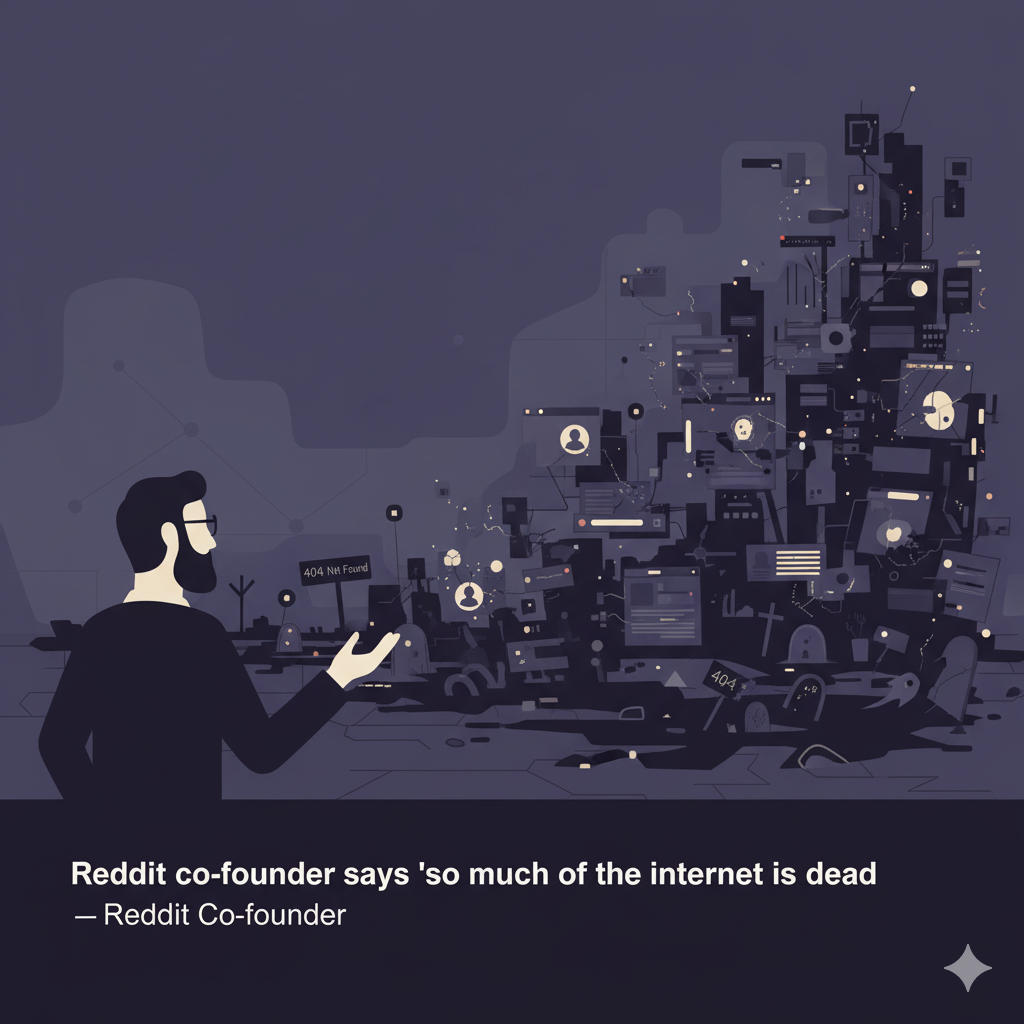
Reddit co-founder says ‘so much of the internet is dead’
Intro
“Why Alexis Ohanian Says the Internet Is Dying—and What’s Next”
Article
Alexis Ohanian, co-founder of Reddit, recently made waves by declaring that “so much of the internet is dead.” At first glance, this might seem like an overstatement. After all, the internet is more populated than ever, with billions of active users and an endless stream of content. Yet, Ohanian’s assertion points to a deeper truth: the vibrancy and authenticity that once characterised online interactions are increasingly overshadowed by bots and low-quality content.
Consider this: a 2023 report from the Pew Research Center found that nearly 50% of internet traffic is generated by bots. These automated entities flood platforms with spam, misinformation, and irrelevant content, diluting the quality of genuine communication. What was once a space for authentic dialogue has become a battleground for clickbait and algorithm-driven noise.
The rise of these bots has led to a paradox. While connectivity has expanded, meaningful engagement has diminished. Users are bombarded with a cacophony of voices that often drown out the insightful and the original. This shift is not just a nuisance; it fundamentally alters how we perceive and interact with digital spaces.
The Quasi-AI Epidemic
Ohanian also points to the influx of “quasi-AI, LinkedIn slop” as a major contributor to the internet’s decline. This term encapsulates the flood of generic, formulaic content that fills professional networks and social media feeds. It’s the kind of content that priorities quantity over quality, often generated by AI tools that churn out articles and posts devoid of real substance.
Take LinkedIn, for example. A glance at the platform reveals an overwhelming number of posts that follow the same tired templates: motivational quotes, vague career advice, and self-serving success stories. While these posts may garner likes and shares, they rarely foster meaningful discussions or connections.
The result? A homogenized landscape where originality is sacrificed for engagement metrics. This trend not only stifles creativity but also alienates users who crave authentic interactions. Ohanian’s critique serves as a wake-up call for content creators: if you want to stand out, you need to break free from the mold.
The Impact on Community Engagement
The decline of authentic content has serious implications for online communities. Reddit, once a bastion of niche discussions and passionate debates, is now grappling with a flood of low-effort posts and bot-driven interactions. Subreddits that once thrived on deep dives into specific topics are now cluttered with superficial commentary and promotional content.
For instance, the subreddit r/technology, known for its insightful discussions, has seen a marked increase in posts that prioritize sensational headlines over substantive analysis. This shift not only frustrates long-time users but also drives newcomers away, leading to a vicious cycle of disengagement.
The implications extend beyond Reddit. As communities become less vibrant, they lose their ability to foster innovation and collaboration. When users feel overwhelmed by noise, they often retreat, leaving behind a barren digital landscape. Ohanian’s observation highlights the urgent need for platforms to prioritise quality over quantity, fostering environments where genuine conversations can flourish.
The Path Forward
So, what can be done to revive the internet’s dying authenticity? Ohanian suggests a return to the roots of online interaction: prioritising community-driven content and encouraging meaningful engagement. This means creating spaces where users feel empowered to share their thoughts without fear of being drowned out by bots or low-effort posts.
One actionable takeaway is to engage with platforms that prioritise quality content. Look for forums, blogs, and social media channels that emphasise thoughtful discussion over clickbait. Seek out communities that align with your interests and values, and contribute to them authentically.
Another strategy is to be discerning about the content you consume and share. By consciously choosing to engage with high-quality material, you contribute to a healthier digital ecosystem.
A Call to Action
Ohanian’s candid assessment of the internet’s current state is a rallying cry for users and creators alike. The digital landscape is at a crossroads, and it’s up to each of us to decide its future. By prioritising authenticity and meaningful engagement, we can breathe new life into the online spaces we inhabit.
In a world where bots and generic content threaten to dominate, let’s reclaim the internet as a vibrant, authentic space for connection and creativity. The future of our digital interactions depends on it.
Conclusion
Ohanian’s stark declaration that “so much of the internet is dead” isn’t just a catchy soundbite; it’s a clarion call for all of us navigating this digital maze. As bots proliferate and quasi-AI content floods our feeds, we risk losing the genuine connections that once defined our online experiences. This matters deeply because, in an age where authenticity is currency, our professional and personal interactions are increasingly shaped by algorithmic noise rather than meaningful dialogue.
Imagine a future where every click leads you to thought-provoking insights rather than recycled platitudes. This isn’t a distant dream; it’s a tangible goal we can achieve by consciously curating our online environments and supporting platforms that champion quality over quantity.
So, I challenge you: What if we all committed to sharing and engaging with content that sparks real conversations? The choice is ours—let’s not just scroll mindlessly but strive to reclaim the internet as a vibrant tapestry of creativity and connection. In doing so, we can transform our digital spaces from barren landscapes into flourishing communities. As Ohanian suggests, the future of our online interactions depends on our willingness to prioritise authenticity over the allure of easy engagement.
Discover more from AI Facts
Subscribe to get the latest posts sent to your email.