Why AI Innovation Is Outpacing Customer Adoption
Intro
“Why AI Innovation Is Outpacing Customer Adoption—And What It Means”
Article
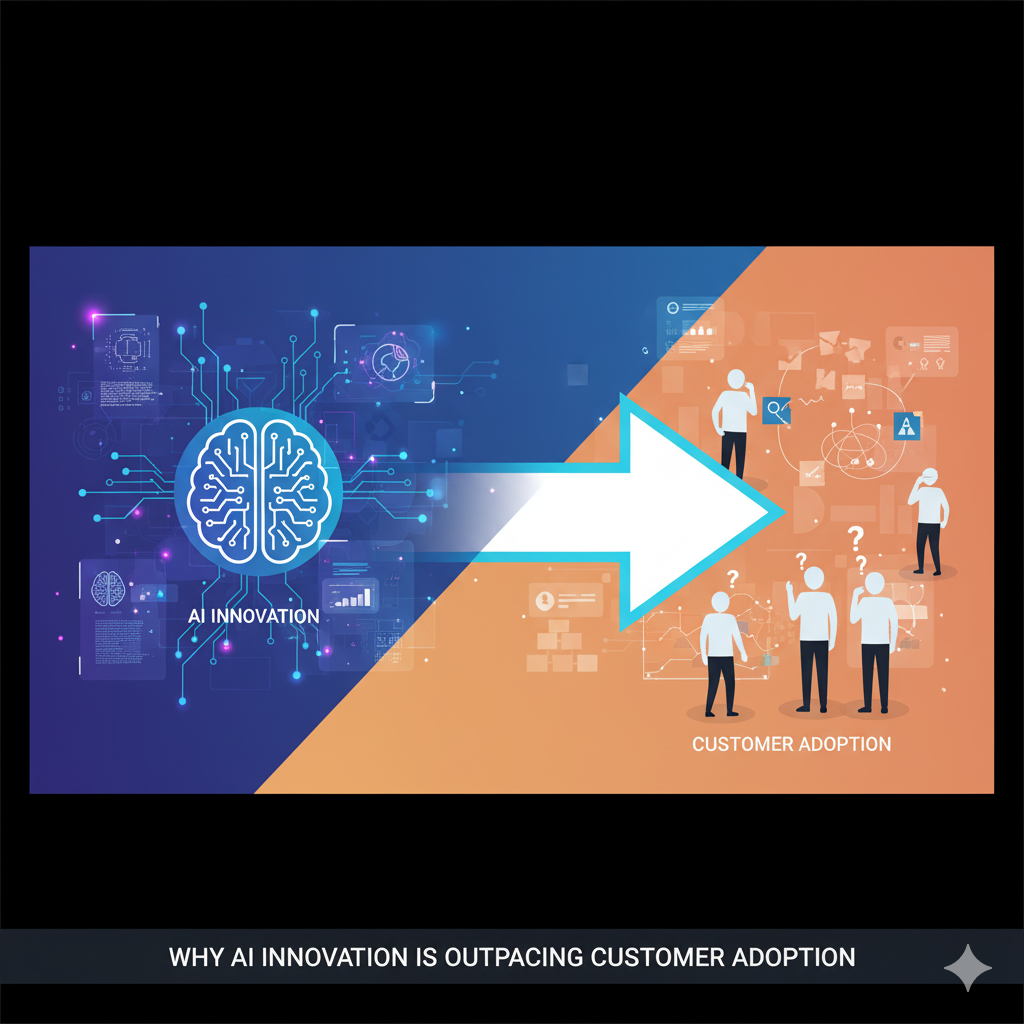
Salesforce CEO Marc Benioff recently made waves by stating that AI innovation is “far exceeding” customer adoption. This assertion may seem counterintuitive at first glance. After all, we live in an era where technology is rapidly integrated into daily life. Yet, the gap between groundbreaking AI advancements and their actual implementation in businesses is wider than many realise.
The AI Revolution: A Double-Edged Sword
AI has become a buzzword synonymous with progress. From chatbots enhancing customer service to machine learning algorithms predicting consumer behaviour, the potential seems limitless. However, Benioff’s observation highlights a critical issue: while innovations are plentiful, many organisations struggle to leverage them effectively.
For instance, consider the retail giant Walmart. They invested heavily in AI to optimise supply chain logistics. Despite having access to cutting-edge tools, the company faced challenges in fully integrating these systems into their existing frameworks. The result? A slower-than-expected return on investment, as teams grappled with the complexities of change management and employee training.
This scenario is not unique. Many businesses find themselves overwhelmed by the sheer volume of AI options available. The technology is evolving faster than the strategies to implement it. As a result, companies often miss out on the benefits, stuck in a cycle of analysis paralysis.
Benioff’s statement serves as a wake-up call. Organisations must not only invest in AI but also prioritize the cultural and operational shifts necessary for successful adoption.
Bridging the Gap: A Call for Education and Training
One of the primary barriers to AI adoption is a lack of understanding. Many employees are unsure how to utilize these tools effectively. According to a recent survey by McKinsey, 70% of organisations report that they struggle to implement AI due to insufficient skills and knowledge among their workforce.
Salesforce is addressing this issue head-on. The company has launched initiatives aimed at upskilling employees and providing resources that demystify AI technologies. By fostering a culture of continuous learning, Salesforce is not just promoting AI; they are ensuring that their workforce is equipped to harness its potential.
A striking example is the partnership between Salesforce and the educational platform Coursera. Together, they offer courses that empower professionals with the skills needed to thrive in an AI-driven landscape. This initiative not only enhances individual capabilities but also strengthens the organization as a whole.
The takeaway here is clear: businesses must invest in education and training as part of their AI strategy. Without a knowledgeable workforce, even the most advanced technologies will remain underutilized.
The Human Element: AI as an Enabler, Not a Replacement
Another critical aspect of AI innovation is the misconception that it will replace human jobs. In reality, AI is best viewed as an enabler that enhances human capabilities. Benioff emphasises that the future of work lies in collaboration between humans and machines.
Take the case of IBM’s Watson, which has been deployed in healthcare settings to assist doctors in diagnosing diseases. Rather than replacing physicians, Watson analyses vast amounts of data to provide insights that help doctors make informed decisions. The result is improved patient outcomes and a more efficient healthcare system.
This perspective shifts the narrative from fear of job loss to one of empowerment. Organisations should focus on how AI can augment their workforce, allowing employees to engage in more meaningful and strategic work.
In this context, the key insight is that AI should not be viewed as a threat but as a partner. Embracing this mindset can lead to innovative applications that enhance productivity and creativity.
Actionable Strategies for Businesses
So, how can organisations bridge the gap between AI innovation and customer adoption? Here are a few actionable strategies:
**Foster a Culture of Learning**: Encourage continuous education and provide resources for employees to upskill in AI technologies. This investment pays dividends in the long run.
**Pilot Programs**: Start small with pilot programs that allow teams to experiment with AI tools. This approach minimises risk while providing valuable insights into what works and what doesn’t.
**Emphasise Collaboration**: Create cross-functional teams that include both tech-savvy individuals and those from traditional roles. This diversity can spark innovative ideas and ensure that AI solutions are user-friendly.
**Measure Impact**: Establish clear metrics to evaluate the success of AI initiatives. This data-driven approach will help organisations understand the return on investment and make necessary adjustments.
Ultimately, the disconnect between AI innovation and customer adoption is not insurmountable. By addressing the cultural, educational, and operational challenges, businesses can unlock the full potential of AI. As Marc Benioff suggests, the future belongs to those who are willing to adapt and evolve alongside technology. Embracing this journey may be the key to staying ahead in an increasingly competitive landscape.
Conclusion
Despite the rapid pace of AI innovation, the stark reality is that many organisations are still grappling with how to leverage these advancements effectively. This gap isn’t just a tech issue; it’s a human one, affecting how we work, learn, and adapt in a world increasingly driven by artificial intelligence. As professionals, we must recognise that embracing AI isn’t merely about adopting new tools—it’s about cultivating a mindset that values continuous learning and collaboration.
Imagine a future where AI doesn’t replace jobs but instead elevates our roles, allowing us to focus on creativity and strategic thinking. This shift is not a distant dream; it’s a necessity for survival in the competitive landscape of tomorrow. Companies like Salesforce are already paving the way by prioritising education and fostering a culture of innovation.
So, as we stand on the brink of this technological revolution, ask yourself: Are you ready to transform your approach to AI? The time to act is now; the journey toward meaningful adoption begins with you. “In a world where AI is the new frontier, those who learn to ride the wave will not just survive—they will thrive.”
Discover more from AI Facts
Subscribe to get the latest posts sent to your email.